

Your mind wasn't built for constant stimulation
The average person spends
70 days a year on their phone:
drained and overstimulated
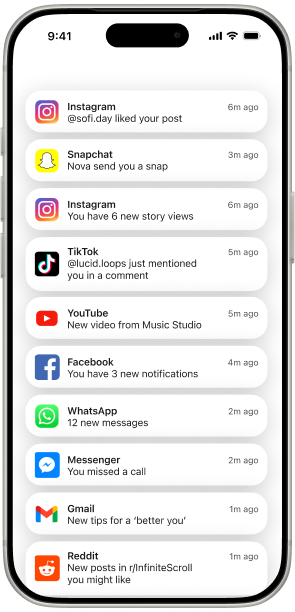
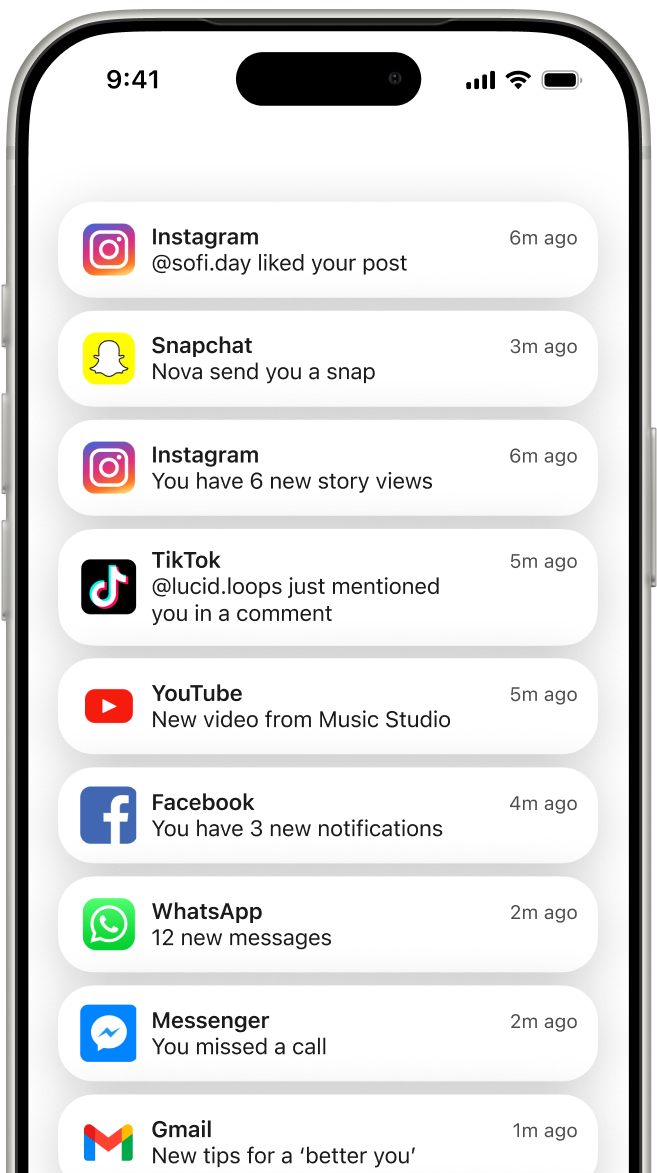
Your brain didn't choose this.
FWRD gives you the OFF switch.
Your brain didn't choose this.
FWRD gives you the OFF switch.
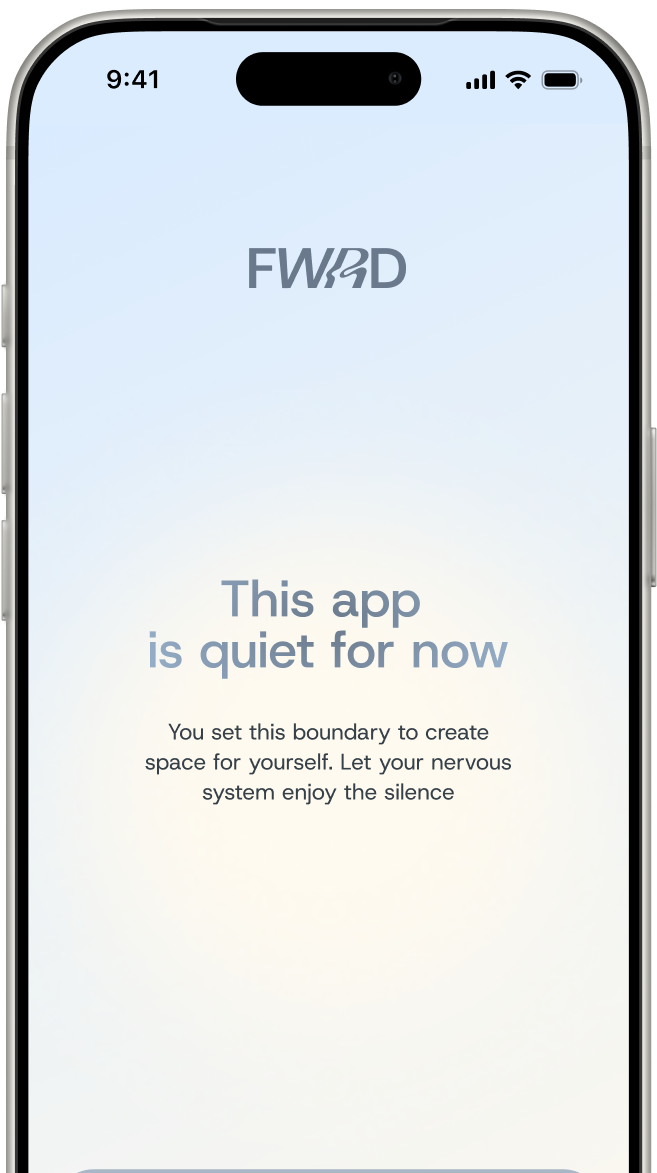
What changes when you step away

Less overstimulated nervous system
The average adult now spends 4–6+ hours a day on their phone, and NIH’s largest-ever brain imaging study linked 7+ hours of daily screen time to premature thinning of the cortex — the part of the brain responsible for focus, logic, and emotional regulation. Each notification triggers a mini stress response, keeping the brain in low-grade "high alert." Even a 24–48 hour reduction in screen time has been shown to begin resetting the brain’s reward sensitivity.
Sources: NIH ABCD Study; published research on sensory overstimulation and screen use

Fewer stress spikes
Phone use measurably raises cortisol, your primary stress hormone. A study published in Computers in Human Behavior found that adolescents with heavier phone use and larger social networks had significantly elevated cortisol awakening responses and higher IL-6 (an inflammation marker). Separate lab research has shown salivary cortisol rises in response to incoming texts and notifications — meaning your body is biologically reacting to your phone, even when you aren't consciously stressed.
Sources: Afifi et al., "WIRED" study, Computers in Human Behavior; salivary cortisol research on phone notifications

Reduced anxiety from constant input
In a randomized controlled trial of 154 adults, participants who stopped using social media for just one week reported significantly lower anxiety and depression and higher well-being than the control group (Lambert et al., 2022, Cyberpsychology, Behavior, and Social Networking). A separate RCT of 220 young adults found that cutting social media to ~1 hour/day for 3 weeks produced significant drops in anxiety, depression, and fear of missing out — and improved sleep — within 21 days.
Sources: Lambert et al. 2022; Davis & Goldfield 2024 RCT

Deeper, more restorative sleep
Phone use before bed suppresses melatonin, the hormone that signals sleep. A controlled sleep-lab study (Höhn et al., published in Sleep Medicine) found that 90 minutes of pre-bed smartphone reading reduced slow-wave sleep — the deepest, most physically restorative stage — in the first quarter of the night, and blunted the next morning's cortisol awakening response. The Sleep Foundation notes that 2+ hours of evening screen time can disrupt the melatonin surge needed to fall asleep.
Sources: Höhn et al., Sleep Medicine; National Sleep Foundation
Select the apps that feel most distracting
Tap the FWRD card to lock the apps
Keep the card out of reach

Watch how
FWRD works
App Features
iOS and Android Compatible
-
Block any app by category or individually
-
Schedule windows that auto-lock your apps
-
Usage analytics dashboard
-
Different modes for different moments (bedtime, work hours)
-
No internet required to lock/unlock
-
Works offline, no subscription ever



Real people, real relief
Join the thousands building a calmer
relationship with their phone


Get FWRD Bundle
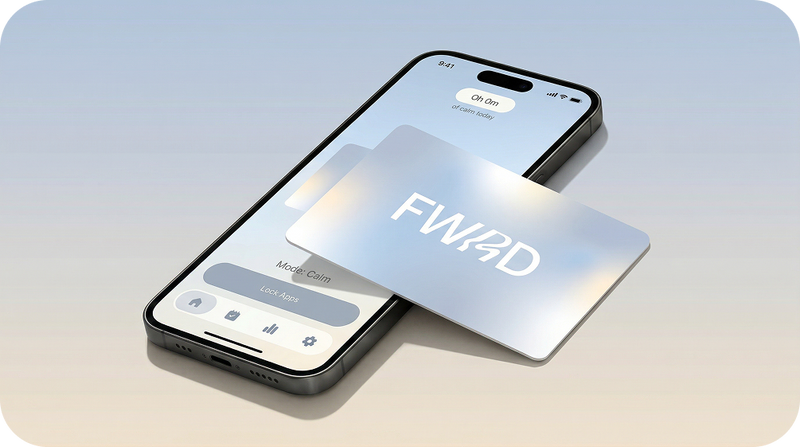
FWRD NFC Card + Lifetime App Access

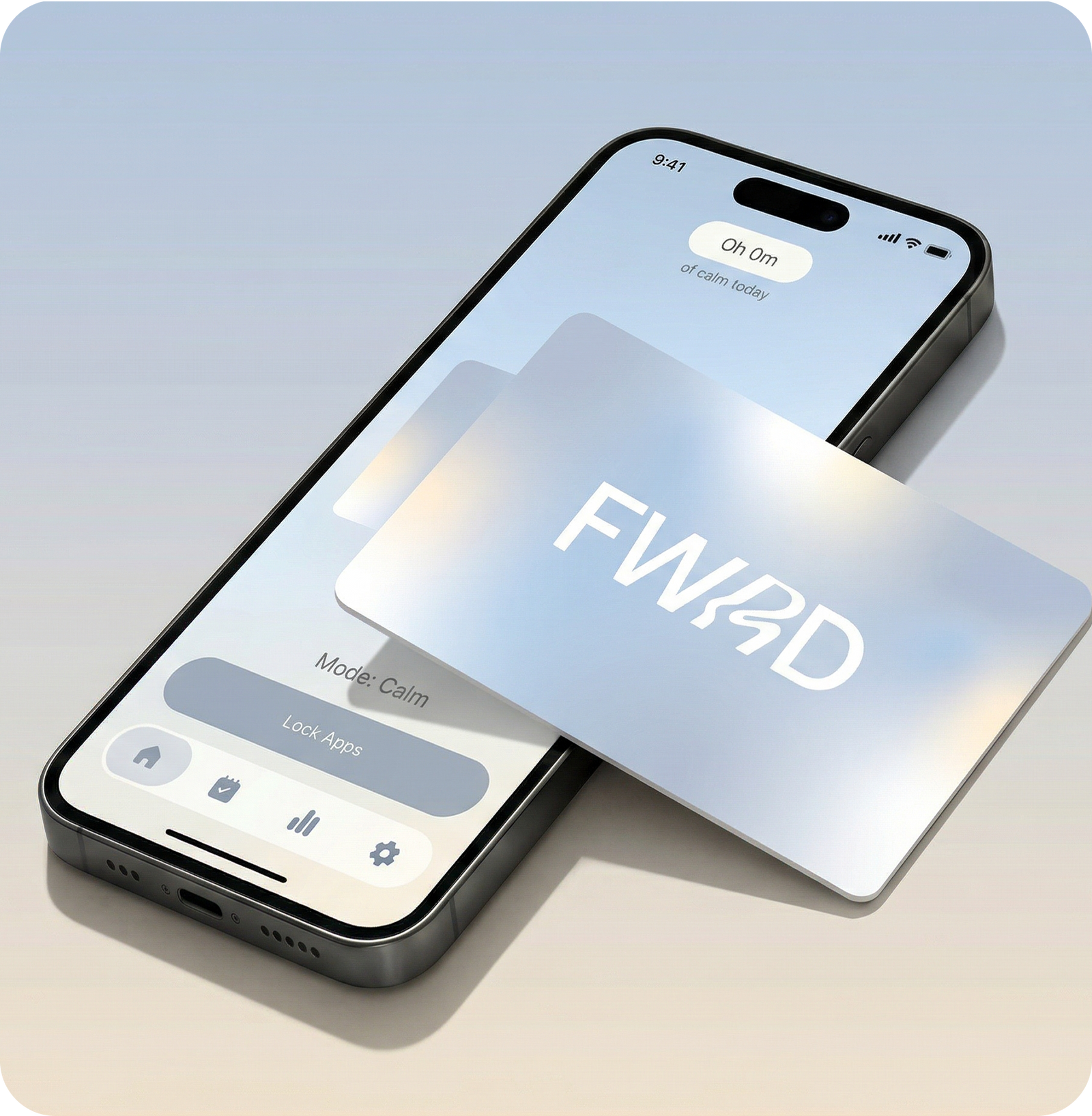
How FWRD creates relief
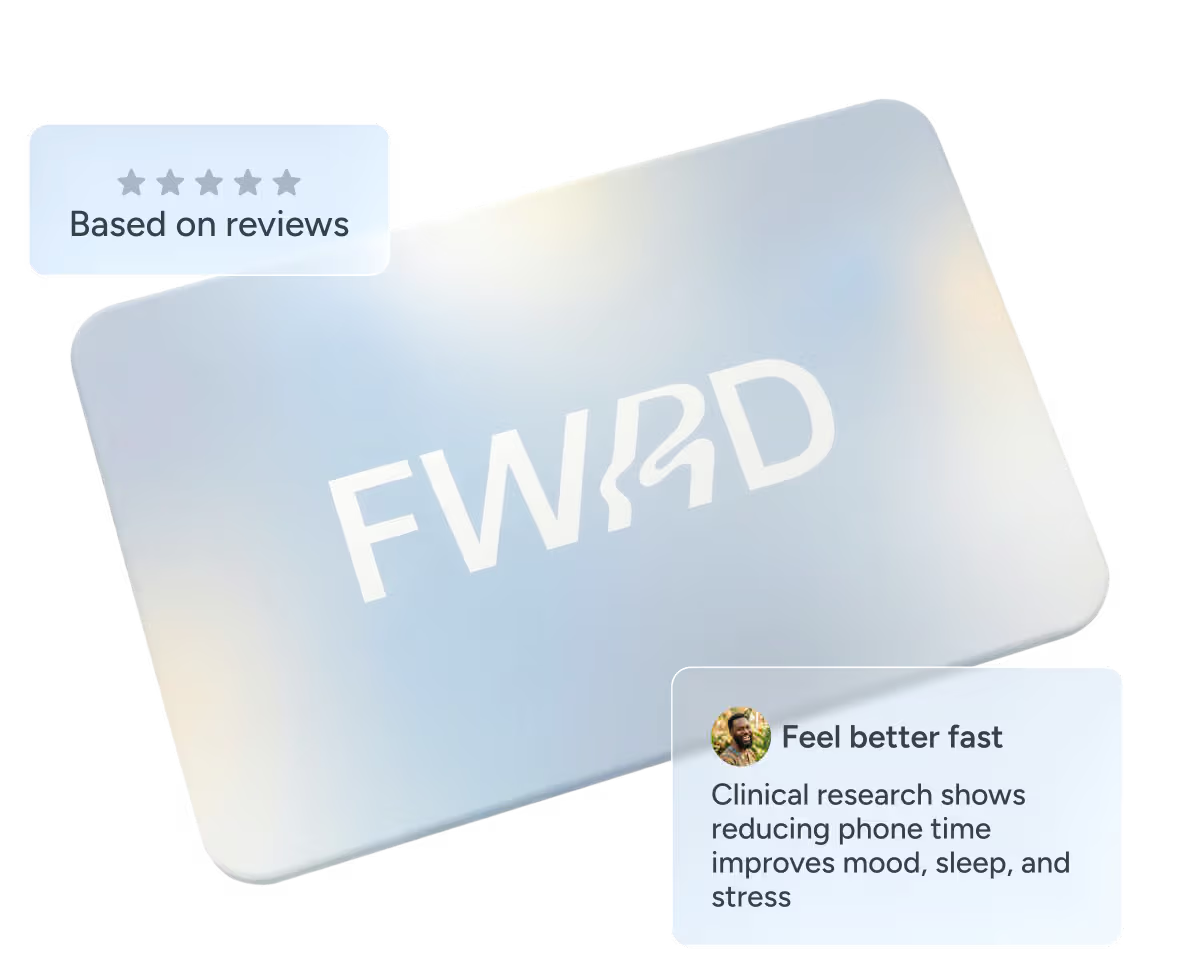
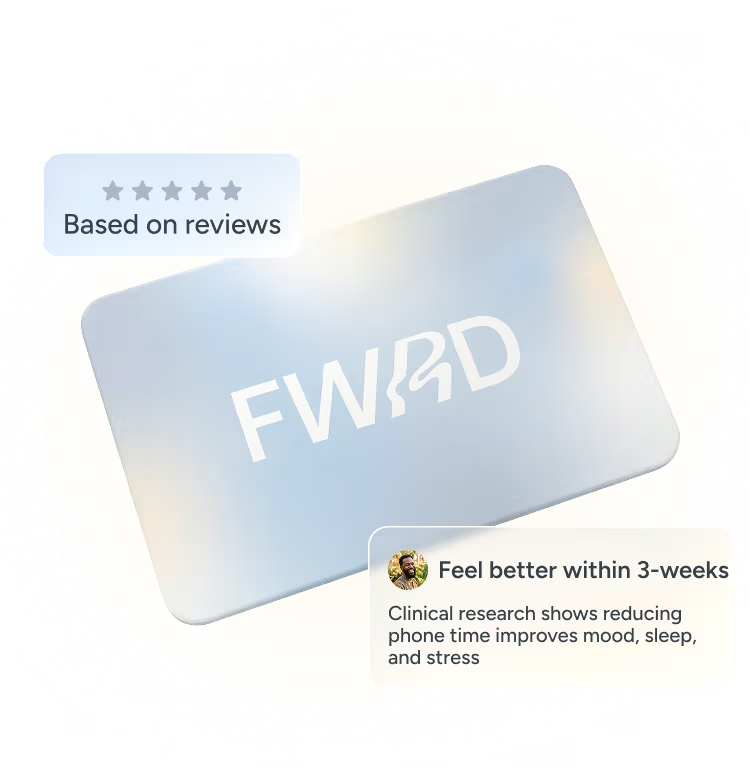
FWRD is a physical NFC card designed to block your distracting apps

Instead of relying on willpower or digital timers, FWRD introduces something tangible: a simple card you tap against your phone to lock and unlock

That small physical step creates real friction between impulse and action. And that friction is what breaks the scroll loop and creates real relief
Everything you’re asking
What is FWRD?
FWRD is a wellness‑first screen time tool that combines a physical NFC card with a companion app. Instead of relying on more willpower, it adds a small moment of friction between you and your most distracting apps, so you can step back from your phone more easily.
What makes FWRD different from regular screen time apps?
Apple Screen Time and Android Digital Wellbeing are built-in tools that set soft limits and send reminders but they're easy to dismiss, rely entirely on you making the right choice in the moment, and don't address how you actually feel. Apps like Opal take a stronger approach to blocking, but they're still software-only: another toggle inside the same device you're trying to step away from.
FWRD is different in two ways:
Physical commitment. The NFC card makes locking your phone intentional and tactile. Tapping a physical object to start a session — and having to open the app and tap it again to end one — creates a real moment of friction that a software button can't replicate. That pause is the point. Most people take it a step further by storing their card somewhere physically separate — in their car, in another room, or giving it to a family member to hold onto. The more effort it takes to retrieve the card and unlock your phone, the stronger the commitment. Physical distance turns a small habit into a real one.
Wellness-first design. FWRD isn't just about limiting screen time — it's about how you feel. The Daily Check-In, Wellness Score, and session data help you understand the connection between your phone habits and your mental state, so you're building self-awareness, not just following rules.
Which phones does FWRD work with?
FWRD is a wellness‑first screen time tool that combines a physical NFC card with a companion app. Instead of relying on more willpower, it adds a small moment of friction between you and your most distracting apps, so you can step back from your phone more easily.
Do I have to carry the card with me all the time?
FWRD is a wellness‑first screen time tool that combines a physical NFC card with a companion app. Instead of relying on more willpower, it adds a small moment of friction between you and your most distracting apps, so you can step back from your phone more easily.
What happens if I lose my FWRD card?
FWRD is a wellness‑first screen time tool that combines a physical NFC card with a companion app. Instead of relying on more willpower, it adds a small moment of friction between you and your most distracting apps, so you can step back from your phone more easily.
Is my data private and secure?
FWRD is a wellness‑first screen time tool that combines a physical NFC card with a companion app. Instead of relying on more willpower, it adds a small moment of friction between you and your most distracting apps, so you can step back from your phone more easily.